Monday, October 31, 2011

Occupy New Haven: an Operation in Progress

The main Occupy New Haven encampment consists of several dozen tents nestled in a corner of the Hew Haven Green. Hundreds of protesters have shown up for some of the group’s events, and many come and go throughout the day. Only a minority have made the space their temporary home.

A village of tents has arisen on the New Haven Green. Its inhabitants each has a slightly different reason for being there. They all share one thing in common, though: dissatisfaction with growing social disparity.

This is Occupy New Haven, a local offshoot of the global Occupy Wall Street protest movement that began Sept. 17 in Zuccotti Park, New York City. It has its own local flavor to it.

It's Personal

“Moose” declines to give his real name. He, like several others in his community, is wary of the media.

He wears a sign draped around his neck that reads, “Department of Hornland Security. When asked why he wears it, he pulls out a makeshift horn and blows into it like a megaphone.

Moose says he moved to New Haven from New Hampshire nine years ago. He graduated from UNH in 2006, but is currently unemployed. So is his fiance, who attained a master's degree in psychology. They're saddled in over a hundred thousand dollars in student loans.

“I have a hard time identifying the difference between that and indentured servitude,” he says.

Not too long ago, he points out, finishing an undergraduate degree was considered a major accomplishment. “Now a bachelors degree is the equivalent of a high school diploma,” he says.

Moose and his community plan to occupy downtown New Haven indefinitely. To do that, they have had to make a concerted effort to prepare and sustain themselves. They've developed more than ten committees to handle various tasks, from legal issues to safety to music.

The New Haven group has benefited from its later start compared to the first Occupy Wall Street encampment, says Moose. They have a permit from the city to be there. They began planning their supply needs before they moved to the green. They have an amicable relationship with the police.

They also have a much more expansive space. Zuccotti Park is a mere 33,000 square feet, or .076 of an acre. The New Haven Green is 16 acres. The camp only covers an out-of-the-way corner of the green. The area, surrounded by old New England-style churches and apartments, is idyllic for an occupation.

A sign decries the differing rules that govern student loan debts and bailouts for large businesses.

A Community Vision

Hundreds of people have shown up at some of Occupy New Haven's rallies. Some come and go freely throughout the day. Only a relative few stay overnight in several dozen tents strewn across the grass.

Ninety-nine percent of the time, the 99 percent are not protesting; they're searching out supplies, having individual conversations, eating and sleeping. On a Friday afternoon, a meeting of 25 or so convenes near the Information tent. They sit in a circle on the ground or in lawn chairs.

One wonders if there should be more regular meetings. A debate ensues over whether to move some meetings to earlier times or keep them later to allow for people getting out of work to come. Someone asks if smaller meetings could take place throughout the day.

A woman at the outskirts of the circle notices that a car in the street is being towed. She stands up and calls, “Mic check!”

“Mic check!” the others around her call out in unison, using the group amplification tactic called the “human megaphone.”

“Someone’s car is getting towed,” she says. The group repeats the sentence. Everyone looks out to the street, but no one moves to claim the car. The meeting continues.

The occupiers have a number of makeshift public institutions, such as this “library.”

Afterward, Amanda Taylor returns to the Comfort tent to sort clothes and blankets. As a member of the Comfort Committee, it's her job to manage the inventory.

She takes her task seriously. The days are getting colder, and there are incoming donations to sort and distribute.

Taylor grew up in North Stonington, and this is the first time she's been to New Haven. She has felt the sting of economic inequality. Her family had little money when she was growing up. She didn't go to college because she couldn't afford it.

In New Haven, though, she learned just how wide the economic gap can get.

“I'd never seen a homeless person before,” she says. “It's really sad. People aren't homeless in North Stonington.”

Some of the clothing donated to the Occupy New Haven group, she says, now go to the local homeless community, many of whom spend most of their time at the New Haven Green.

Taylor is glad to be helping others in a tangible way, even as she struggles with her fellow protesters to spur action from the most powerful in society.

Comfort committee member Amanda Taylor takes stock of some of the demonstrators’ supplies.

Organizational Networking

Win Heimer is trying to coordinate Occupy New Haven with its correlate in Connecticut's capital, Occupy Hartford. He is not a member of either, but he wants to support both with supplies and services.

Heimer is a union representative with the Alliance for Retired Americans, and part of the Greater Hartford Central Labor Council.

Several unions across the country have joined in demonstrations. The worldwide phenomenon that began near Wall Street is combating economic injustices that Heimer says he's been fighting against for a long time.

Heimer and his associates at a local union have arranged buses between New York, New Haven and Hartford. He says he is hoping to find a biodiesel generator for the encampment on the green.

Heimer is careful not to try to push the groups in a particular direction, however. Everyone prefaces their statements by saying they do not speak for the group, including him.

“This movement has just started. We have to see where it goes,” he says, adding, “hopefully it will bring changes that benefit our children and grandchildren.”

A message of peace decorates the medical tent.

Martina Crouch, a New Haven resident, is also hoping that the movement brings changes. She says she joined because she found people who thought like she did there. Then she realized that the protests could become a launching pad for something greater – a community conversation.

A number of the Occupy New Haven demonstrators note that they view their role in movement as an opportunity for local change. Crouch agrees with that sentiment. In this sense, one of the main themes of the their protest sounds like twenty-first century version of a distinctly New England tradition: the town hall meeting.

She says that the media cannot possibly portray the culture of the occupiers as well as experiencing it firsthand.

“Whatever preconceptions you may have,” she says, “you should come down and see what it really is.”

Occupy New Haven has become a microcosm, a society within a society. For Crouch and her tent community, that in itself is a great success.

“These protests brought people together,” she says.

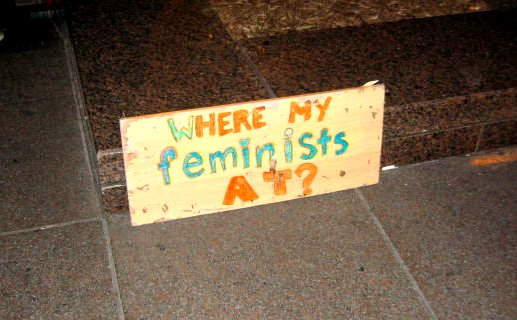
Signs are carefully arranged on the ground in one corner of the encampment when they’re not being used.
All photographs by Brandon T. Bisceglia.

Thursday, October 27, 2011

Community Colleges Benefit Everyone: Letter


A painting in the HCC cafeteria celebrating the college's diversity. Photograph by Brandon T. Bisceglia.


I wrote this letter to the editor in response to an opinion piece by Housatonic Community College President Anita Gliniecki arguing that cutting funding for community colleges is a proposition that is "penny wise and pound foolish." My letter appeared in the Oct. 26 edition of the Connecticut Post:

Housatonic Community College President Anita Gliniecki should be applauded for her defense of community college funding.

I worked my way through HCC, paying for classes out of pocket with the money I earned at a full-time job. It was only because of HCC's low cost that I was able to afford to go back to school.

This spring I graduated with highest honors, a 4.0 GPA and a broad range of new skills. My efforts paid off in the form of scholarships and awards that allowed me to afford to transfer to the University of New Haven.

My experiences at HCC also instilled in me a strong connectedness with the wider community. Community colleges may be better equipped for this than private colleges, because nearly everyone enrolled comes from surrounding municipalities. They share a common stake in the region.

HCC has grown by thousands of students in the past five years. During every year in that same period, state block grant funding has stayed flat or been cut.

An economic impact study completed in 2008 showed that the college contributes $283.9 million each year to the economies of Fairfield and New Haven counties, far more than it receives in state funds.

Having HCC in downtown Bridgeport has made a huge difference in revitalization. Recall what it was like in 1997, the year that HCC relocated to Lafayette Boulevard.

We should all be grateful for the opportunities offered by community colleges. Short-term cuts will only lead to long-term losses for everyone.

More: Read Anita Gliniecki's letter.

Wednesday, October 26, 2011

Reporters talk tech changes in news at UNH

 
Professional journalists speak to students in the Vlock Center for Convergent Media Wednesday about the ways that their work has been changed by the Internet and mobile technologies. From left to right: Hartford Courant reporter Christine Dempsey, Connecticut Post columnist MariAn Gail Brown, Madison, CT Patch.com editor Patricia McNerney. Photograph by Brandon T. Bisceglia.

Three veteran journalists from around Connecticut visited UNH Wednesday evening for a panel discussion with students about the challenges and opportunities that new technologies have brought to their field.

Hartford Courant reporter Christine Dempsey, Connecticut Post columnist MariAn Gail Brown, and Madison, CT Patch.com editor Patricia McNerney shared their experiences and fielded questions from a packed audience in the Laurel Vlock Center for Convergent Media in Maxcy Hall.

The two-hour discussion was titled “News Writing and Editing for Traditional and Social Media,” and was hosted by Adjunct Professor of Communication Michael Bazinet as part of the copy editing course he is teaching this semester. Students from other journalism courses also attended.

Dempsey described how the process of reporting had changed dramatically in the 25 years she has been doing it. She said that when she used to arrive on the scene of a breaking story, she would have to look around for a pay phone to call her editor.

“Now they have these smart phones that can do anything but slice bread,” she said.

McNerney, whose publication exists entirely online, agreed that mobile devices had altered her reporting practices. She said she had “the most amazing experience in journalism” during Hurricane Irene this summer, because she was able to report on what was happening in her hometown of Madison while staying at a friend’s house in Wallingford by using information other residents posted or sent her.

Volunteers are key information sources for McNerney. “The readers start to tell you what to report,” she said.

Brown pointed out that the Internet had “invigorated” print newspapers, too, by helping them to keep up with television and radio.

“Because of the Internet and our websites,” she said, “we’re constantly updating our stories, which is rejuvenating our papers.”

The panelists warned, however, that not all of the changes brought about by new technologies have been positive. Brown noticed a disturbing pattern while covering the trial of Steven Hayes, who was given the death penalty in 2010 for a brutal home invasion and murder in Cheshire. Whenever reporters heard something they thought was newsworthy, they would tweet it, often in unison. She said the furious tweeting of reporters could send a visual signal to jury members to pay more attention to certain parts of the trial, possibly affecting the way they thought about the case.

For Dempsey, the increasing pressure to get news out as quickly as possible sometimes makes her uncomfortable that she might not have checked her facts thoroughly enough first. She said she had not made any major blunders she knew of. But, she added, “I’ve felt like I was walking a tightrope sometimes.”

McNerney said that, in the face of a faster news cycle, reporters need to continually remind themselves that they have a mission beyond entertainment as society’s watchdogs.

“Are we fulfilling our traditional role as the fourth estate?” she asked.

Despite all of the changes, the panelists agreed that many of the fundamental aspects of their profession remain the same. Dempsey said that strong writing skills were still absolutely essential. McNerney concurred, noting that Patch.com requires prospective reporters to take a writing test, just like traditional newspapers.

She recommended that journalism students avoid focusing only on print, broadcast or web content.

“Don’t think of yourself as a one-dimensional reporter,” she said.

Sunday, October 23, 2011

Tips on Arguing: Vet Your Facts


Vetting your facts simply means looking into them. It may sound like this should go without saying, but failing to double-check a source is one of the most common ways that misinformation spreads.

Internet databases and search engines have given people access to more information than ever. But not all information is created equal. Public relations departments disguise their self-advertising to look like news stories. Poltical groups shape the presentation of facts to fit their agendas. Groups peddling pseudo-science publish their own journals, and conspiracy theorists sometimes make stories up out of whole-cloth.

Even if you are using a well-respected source, there is always a chance that human error will creep in. If you read New York Times articles that are more than a few days old, you may see corrections posted at the bottom of the page. It’s not because they weren’t careful the first time around – it’s because new information has overturned a previous statement, or new sources have provided further details.

There are several ways to get your facts straight, though none is foolproof. Whenever you can, you should always use a primary source over a secondary one. Primary sources tend to be more accurate and deliver more nuances.

Cross-checking is a simple way to make sure your facts are legitimate. If one source says A is true, find a different source – one that is independent of your first source - and see if it says the same thing. If your second source says that B is true, you’ll have to do more research to figure out which is closer to the truth.

If you’re drawing facts from scholarly journals or books, go through their references. Did the “fact” about Thomas Jefferson’s beliefs come from a document he wrote or from Wikipedia? If it came from Wikipedia, it might be correct – but the chances for error are higher.

Another tool often used by researchers to determine whether a given scholarly article is widely accepted by the academic community is to find out how many times it’s been cited by other papers. The more citations, the more likely it is to be useful information.

Unfortunately, there is no perfect way to vet your facts. Eyewitnesses remember things inaccurately. Typing, writing, and speaking mistakes are common. Personal biases can cloud even the most intelligent person’s assessment of a situation.

Vetting your facts is, however, the best way to minimize your own errors. It doesn’t mean that you’ll get everything right, but it will prevent you from getting a whole lot of things wrong.

Friday, October 21, 2011

Occupying Wall Street After Dark

The Occupy Wall Street protest in Zuccotti Park does not end when the sun goes down. Hundreds of people, from curious onlookers to news crews, mill in and around the sliver of green space near Manhattan’s World Trade Center.


An infrastructure has evolved around the site to compensate for various needs. It’s a little like a tiny island nation in an ocean of concrete and glass.


All around the rim of the park are signs. Some are specifically related to protest events. Others carry some of the social messages that members want to express.


Those who stay in Zuccotti Park as the winter closes in face numerous challenges. They must eat, sleep, clean up after themselves and keep warm, all while maintaining the momentum of the movement many are hoping to spark.


All photographs by Brandon T. Bisceglia.

Read more about past protest movements.

Tuesday, October 18, 2011

Around UNH: Parrot Carving


This carved wooden parrot is from the Upper Sepick river region of Papua New Guinea. The 12-inch bird, painted with red, white and black pigments, is on display in Dodd's Hall at the University of New Haven in Connecticut. Photograph by Brandon T. Bisceglia.

Thursday, October 13, 2011

Video: Jazz for Peace Plays World Artist Network Benefit

 Jazz for Peace front man Rick DellaRatta. Photograph by Brandon T. Bisceglia.


The nonprofit Jazz for Peace Foundation played a benefit concert for the World Artist Network on Sept. 17 at the Acoustic Cafe in Bridgeport. In this clip, the band pays tribute to Thelonious Monk’s rendering of the 1929 song, “Just You, Just Me.”

Friday, October 7, 2011

To Encourage Scientific Literacy, Reward Citizen Scientists

Citizen scientists have been making contributions for centuries. This 1843 microscope was used by amateur naturalist Caroline Bucknall Escourt while her husband, a British military officer, was stationed in the Canadian colonies. Photograph courtesy of the Canadian Science and Technology Museum. Some rights reserved.

Two new planets outside our solar system were discovered using data from NASA's Kepler telescope. But not by scientists.

The discoverers were citizen scientists participating in an online project called Planet Hunters, which was set up specifically to allow members of the public to sift through Kepler's information. Six of these volunteers were listed as authors in the Sept. 22 paper about the planets, published in the Monthly Notices of the Royal Astronomical Society.

The Planet Hunters are only the latest in a series of non-scientists who've made important contributions to science. A team of video-gamers playing a competitive protein-folding simulation game called Foldit also in September worked out the structure of a protein belonging to the Mason-Pfizer monkey virus, an HIV-like virus that causes AIDS in monkeys. It took them three weeks to do what professional scientists had been working on for years.

The value of harnessing public participation through games and projects is not lost on the scientific community. Hundreds of project websites can now be found with a simple Google search. Scientific American recently added an entire section to its website devoted to citizen science.

Yet science literacy remains low among non-scientists. The National Science Foundation concluded in a 2006 report that “most citizens do not have a firm grasp of basic scientific facts and concepts, nor do they have an understanding of the scientific process. In addition, belief in pseudoscience seems to be widespread, not only in the United States but in other countries as well.”

A low level of literacy matters. Take this year's Republican candidates. Minnesota Rep. Michele Bachmann was roundly repudiated by scientists and pundits after she claimed to have met a woman who said her son's mental retardation was caused by the HPV vaccine. Texas Gov. Rick Perry made his illiteracy known on several occasions, with dubious comments about both evolution and climate change.

These people want to be president. They already command high offices, where they no doubt deal with science-related subjects on a daily basis.

Speaking about Congress on WNPR's “Where We Live,” Princeton Physicist and New Jersey Rep. Rush Holt recently noted, “There are 435 people in the House and 420 don’t know much about science and choose not to.”

Ultimately, though, it is the voters who elect leaders. They can't possibly hold politicians to account about science without first understanding it themselves.

Citizen science may be a way to close the knowledge gap, if incentives are put in place to raise its profile and spur interest. That's why an award, given once a year at an ostentatious ceremony, should be established for an individual or group who contributes significantly to the advancement of science.

No such award currently exists. Groups that organize citizen science have prizes, but the citizens themselves have no reward other than fulfiling their passions for discovery.

Rewarding citizen science would break down one more perceived barrier between the “elite” researchers and everyone else. Recognition is known to be a driving force among professional scientists. Their careers are built on getting their names published and receiving awards from their colleagues. We expect scientists to want these rewards. Why wouldn't anyone else want the same thing?

Introducing competition could have added benefits for scientic literacy. Science works because its core dynamics—not its methods or techniques per se—are rooted in pitting intellects against one another,” said Thomas W. Martin, an Honors Faculty Fellow at Barrett Honors College at Arizona State University in Tempe, Ariz. in an essay (that, incidentally, won an award) for Seed magazine in 2007. “Science eventually yields impressive answers because it compels smart people to incessantly try to disprove the ideas generated by other smart people.”

The MNARS paper took a small step toward rewarding the volunteers from Planet Hunters by giving them the status of co-authors. It's a small, but rarely taken, step.

Most importantly, perhaps, is the fact that citizen scientists may end up making huge contributions in the coming years. As Astronomer Phil Plait wondered on his “Bad Astronomy” blog: “Will the first exoEarth be found by a professional astronomer, or instead by some science enthusiast who decided one day to check out this Planet Hunters thing?”

It's a question we should all be seriously considering.

Friday, September 30, 2011

Ranking UNH

U.S. News & World Report placed the university on its list of “tier one” colleges for the second year in a row. But are the numbers all they’re cracked up to be?

If you believe the hype, UNH may have entered a new era of prestige.

U.S. News & World Reports has ranked the university 110 among regional colleges in its 2012 listing of “Best Colleges,” landing it a spot for the second year among the “top tier” in the “Regional Colleges – North” category.

The category includes colleges that offer a full range of undergraduate programs, but few doctoral programs. Colleges with doctoral programs are listed in a separate national category.

Just what do the rankings say about the quality of the institution, though?

In a press release for UNH Today, President Stephen H. Kaplan reasoned that UNH's rise in the U.S. News rankings was due to “substantial investments toward expanding academic programs, enhancing student life and creating state-of-the-art campus facilities,” which have “helped us attract more high-achieving students and world-class faculty.”

Alice Aleksandrovich, a senior who is double majoring in English literature and political science, has noticed some major improvements during her tenure at UNH. “It’s more technologically advanced than when I started,” she says. “The bookstore, health services, tutoring and other student services are also much better.”

Aleksandrovich still thinks there’s room for improvement, though. She says she would like to see more housing built, especially for sororities and fraternities. She also says that too much of the material in the library is outdated.

UNH’s sustained presence on the “Best Colleges” list is certainly beneficial for the university. U.S. News is the most popular resource in the nation for comparing colleges. Being in the top tier means greater exposure among students and parents researching prospective colleges.

Perhaps more importantly, it means greater exposure within the community of academic institutions. There’s an irony to making the list: since 25 percent of a regional college’s ranking is determined by the assessment of other college presidents, simply being on the list makes it more likely that a president who has never actually seen the campus will have a favorable view of UNH.

U.S. News has come under increasing criticism in recent years for the ways in which it judges schools. In February, New Yorker Staff Writer Malcolm Gladwell slammed U.S. News for using prejudicial criteria. He called the reputation factor a “self-fulfilling prophecy.”

“When U.S. News asks a university president to perform the impossible task of assessing the relative merits of dozens of institutions he knows nothing about,” wrote Gladwell, “he relies on the only source of detailed information at his disposal that assesses the relative merits of dozens of institutions he knows nothing about: U.S. News.”

Gladwell pointed out that other proxies for quality U.S. News uses to measure the success of a college - such as professor salaries or admissions selectivity - have little to do with student engagement, the single most important predictor of a student’s success at college.

Gladwell also noted that U.S. News omits some criteria, such as cost, in its rankings. He writes: “at a time when American higher education is facing a crisis of accessibility and affordability, we have adopted a de facto standard of college quality that is uninterested in both of those factors.”

The U.S. News rankings have led people astray in the past. “Most students and parents think the rankings are important,” says Victor Rios, a double major in English and journalism in his second semester at Quinnipiac University in Hamden. “For me, I fell into that spell when I applied.”

Quinnipiac has ranked well in U.S. News. It took the number 11 slot this year. Rios says, however, that some professors allow too much leniency with assignments and due dates. He feels that the college hasn't done as much to foster his intellectual abilities as he had expected.

Rios and Gladwell aren't the only ones who have problems with the U.S. News algorithm, and a few organizations have even attempted to assess college quality on their own terms. In 2009, the American Council of Trustees and Alumni, a nonprofit education group, launched its “What Will They Learn?” survey. It measures whether colleges require students to take courses in seven “key subjects:” composition, literature, foreign language, U.S. government or history, economics, mathematics, and natural or physical science. A grade from A to F is assigned to the institution.

If Rios had used ACTA's rankings instead of U.S. News's, he would have gotten an entirely different impression. There, UNH gets a grade of B and Quinnipiac gets a grade of C.

In addition to his academic dismay, Rios, who was born in Mexico, says that he has been uncomfortable with some of the unintentional prejudices he's encountered.

“People I’ve talked to who work there say that the school understands the problem, and is trying to mitigate it,” he says. Nevertheless, he felt unwelcome when he first came to the campus.

Diversity is often an important piece of college life, especially if you happen to be in a minority group. Only 1 percent of Quinnipiac's population consisted of international students last year. At UNH, on the other hand, these students comprised 7 percent of the student body. U.S. News lists this information, but does not weigh it as part of a college's rank.

Professor Karen Isaacs, who teaches journalism and English at UNH and Housatonic Community College in Bridgeport, warns against placing too much emphasis on rankings.

“In any school, you're going to have exceptional departments and weaker departments. And you can get outstanding students anywhere,” she says.

She says that students need to find what they're comfortable with.

Regardless of whether U.S. News is an accurate guide or not, UNH seems poised to continue its ascent. According to UNH Today, the class of 2015 has higher SAT scores and GPA's than previous years. “The average GPA has continued to increase over the last six years,” says the press release.

Isaacs has been teaching at UNH off and on for about 20 years, and she agrees that the university is on a positive track. “I've seen enormous increases in the quality of the students,” she says.


This article originally appeared in The Charger Bulletin.

Tuesday, September 20, 2011

Tips on Arguing: The Moving Goalpost


Imagine that you’re playing a game of football, and you make a field goal from the 10-yard line. Now imagine that the referee decides not to count your kick. Instead, he orders the goalpost to be moved back an additional ten yards. You make the goal again. He decides it’s still not good enough, and has it moved back another ten yards.

Would you think this was fair?

In argumentation, “moving the goalpost” refers to a similar tactic. Your opponent gives a certain criteria for you to meet, or asks for certain evidence. Then, once you provide it, he or she changes the criteria. It’s an extremely common fallacy, and one that can perpetuate a false controversy for years.

Perhaps the most famous modern example of moving the goalpost exists in the anti-vaccination movement. Concerns over whether vaccines cause autism actually began in the late 1990’s, in Great Britain. According to Michael Fitzpatrick, a British physician and author of several books and articles on the subject, the controversy began with a research paper published by a gastroenterologist named Andrew Wakefield and twelve co-authors (ten of whom later issued a partial retraction) in the journal The Lancet (which formally retracted the entire article last year).

The study looked at twelve children, nine of whom were autistic, who had experienced a form of intestinal inflammation that Wakefield speculated during a press conference was caused by the MMR vaccine. The media seized on it. Many subsequent studies thoroughly debunked his claims, but by then it was too late – the seeds had been planted in popular culture.

As the aftershocks of Wakefield's claims rippled through the U.K., he brought his concerns to the U.S. Only this time, the blame wasn’t laid on MMR; it was placed instead on a preservative called thimerosal, which contained a small amount of mercury. The argument was that because mercury is a known neurotoxin, it could be causing damage to a child’s normal development. This neglected the fact that the dose of mercury was well below dangerous thresholds. It also ignored the fact that there was no causal evidence to suggest a connection.

But that didn’t matter. The goalpost had effectively been moved.

Despite further research that found no link between thimerosal and autism, the U.S. government finally conceded to have the preservative removed from most vaccines in the early 2000’s. Autism rates, as one would expect, were not affected.

Eventually, critics of vaccines had to drop this second line of argument. That hasn’t made them any more reasonable, however. Over the past few years, they’ve built a whole new campaign around the idea that vaccines contain a debilitating cocktail of “toxins.” Antivaccinationists now target this brew as the cause of autism.

In a 2008 article for the blog Science-Based Medicine, surgical oncologist David Gorski unpacked, piece-by-piece, the emptiness of that approach: “for example, they either ignorantly or willfully confuse ethylene glycol (antifreeze, which is not in vaccines) with polyethylene glycol (a polymer of ethylene glycol, a chemically different compound which is in some vaccines and is also in a number of skin creams, tooth paste, and medications, including laxatives)…they’ll also rant on and on about formaldehyde, neglecting the fact that most people are exposed in a single day to more formaldehyde…than babies are exposed to from their entire vaccine schedule.”

Although Gorski and others have the facts on their side, they’re unlikely to convince the opponents of vaccines, no matter how much proof is provided. As long as the goalpost keeps being moved, it remains impossible to score.

Tuesday, September 6, 2011

Toxic Runoff Creates "Rainbow Street" in Fairfield

When Hurricane Irene slammed into Connecticut on Aug. 28, the widespread flooding it brought along shorelines and rivers was hard not to notice.

What may have been less apparent to some people were the contaminates it dragged off the land with receding flood waters.

The pollution was obvious on Kenard Street in Fairfield, though.

At approximately 11 a.m., the tiny road that abuts the construction zone of the new Metro North railroad station was inundated with several feet of water from Ash Creek, which runs through the area.

As the water drained, it left brightly-colored stains across huge swaths of the pavement. A fluorescent sheen of yellows, blues, and pinks marked where the creek had crept across the road (see video above).

As anyone who has owned an old car knows, those stains are caused by motor oils and similar waste products. They are known as nonpoint source pollution.

According to the EnvironmentalProtection Agency, nonpoint source pollution is the leading cause of water quality problems. Billions of dollars are spent every year to test and treat water to make sure that the fish that swim in it, the plants that grow in it, and the humans who drink it all stay healthy.

Nonpoint source pollution becomes worse as urbanization occurs, because soils that once absorbed and neutralized contaminants are replaced by blacktop and other non-porous surfaces. The pollutants sit there, building up until it rains or snows, at which point they're deposited in rivers, lakes – or Long Island Sound.

The Fairfield Metro North complex is a prime example of urbanization. Last summer, the hillside near Kenard Street was occupied by a grove of trees. All of them were removed as part of the development project.

The view now consists of giant piles of contaminated soil dug up by construction equipment. The mounds became a point of consternation for the town after officials realized that the millions of dollars it would cost to remove the soil was not accounted for in the project's budget.

In the meantime, the exposed mounds (and the machines moving them around) contribute their own pollutants to the mix of runoff every time it rains or floods.

Although $7.5 million in additional funds approved by the town on Aug. 31 will pay for cleanup of the soil, Hurricane Irene has already siphoned her fair share of toxic material back into Fairfield's waters. That cost is much more difficult to quantify.

Sunday, August 28, 2011

Hurricane Irene Brings Floods

A weakening-but-dangerous Hurricane Irene tore through southwestern Connecticut Sunday morning, dumping between five and six inches of rain in an area that had already been saturated by previous storms. The highest winds arrived at almost the same time as high tide, which had already been exacerbated by the new moon. The counterclockwise motion of the storm shoved water into Long Island Sound, compounding the problems.

Mandatory evacuations were ordered for beachfront properties in Fairfield, Conn., where several houses collapsed as flood waters crested. Since I live only shortly further inland along the banks of Ash Creek, I checked the Federal Emergency Management Agency (FEMA) floodplain maps for our area the night before the hurricane.

The garden in my backyard was within the 100-year flood zone, as was the end of the street, which terminates in a construction area for the new Metro North train station. These sections, as you can see in the video below, ended up under water.

Our house, fortunately, was sufficiently high up on the slope to avoid inundation.

Wednesday, August 24, 2011

Parsing the Paranormal Debate

UFO? Photo by Håkan Dahlström under Creative Commons Attribution 2.0 Generic License.

The Connecticut Post published a front-page article on Aug. 13 about a local paranormal research group’s activities. After it appeared, an exchange ensued through the newspaper’s opinion section, with skeptics decrying the article and true believers insinuating that the skeptics were close-minded.

Seeing that the vitriol wasn’t subsiding, I jumped into the fray. The Post published my letter, which follows, on Aug. 23:

Unlike some of the skeptical commenters who appeared in the You Said It section throughout last week, I wasn't offended that the Connecticut Post published a front-page article about the Orange-based paranormal group Smoking Gun Research Agency (SGRA).

Regardless of my own skepticism regarding the paranormal, the local nature of the group and its growing popularity within the community make it a newsworthy subject.

The piece was disappointing in one major way, though: it failed to examine the standard of "evidence" for some of the SGRA's claims.

However professional-sounding it may be, the SGRA uses long-debunked pseudo-scientific tools and methods in its investigations. It also employs psychics, not one of whom has ever been able to demonstrate any ability that a well-trained magician or mentalist couldn't perform.

The SGRA's staff members "screen all material" before adding it to their library, according to the article. Yet SGRA's online library includes a title on global conspiracy by David Icke, who famously proposed that a race of shape-shifting "reptoids" from the constellation Draco were secretly controlling human civilization by posing as world leaders.

The evidence for most paranormal phenomena is scant at best. Nevertheless, I do think that paranormal research is important, as long the work is rigorous and scientific.

An open mind accepts new evidence -- after critical scrutiny. The SGRA's bar is apparently much lower than that.

Wednesday, August 17, 2011

Tips on Arguing: Decorative Statistics


At the end of 2008, National Public Radio commentator Frank Deford railed against a growing trend among sports aficionados that he found downright annoying.

“It's getting harder for the statistics freaks in all sports to dream up anything original,” he said. “And so I began to notice that a whole new category of stupid records was now being created.”

Deford went on to list some of the most convoluted stats he had come across, such as the following:

“’He's the only pitcher in’ - get this – ‘the last 4,113 to debut with 10 strikeouts and no walks.’”

Whoever came up with the above statistic had to work hard to make it sound impressive. And it might be effective for the casual observer, who is likely to see the words “only pitcher” followed by a large number and assume that this “record” is significant.

But look a little more carefully, and the emptiness behind the number becomes apparent.

The most glaring problem here is the seemingly arbitrary range of 4,113 pitchers. This pitcher’s record would be meaningful, if, say, it was the first time it had ever happened. That’s apparently not the case, or else the author of the statistic would have said so. Chances are that the reason the statistician picked 4,113 as a starting point is that pitcher number 4,114 had the exact same record (or better).

It turns out that 4,113 isn’t even a big number when put into context. The website MLB.com lists over 1,100 current pitchers in Major League Baseball alone – never mind the other leagues. Granted, not every one gets replaced every season. Still, it only takes a decade at most to see 4,113 new pitchers.

That’s the nature of all decorative statistics: they’re relatively mundane numbers that are tweaked to look more impressive.

Decorative statistics are rife in the sports world, but they can be found in other arenas as well.

Take movies. The 2009 film Avatar was heralded as the highest grossing movie of all time, at approximately $761 million in domestic sales, according to Boxofficemojo.com.

It is the highest, until you adjust for inflation. Measured in today’s dollars, Gone with the Wind weighs in at over $1.6 billion in domestic sales, blowing those Na’vi out of the water. Avatar doesn’t even make the top ten.

Tuesday, August 9, 2011

Senators Make Headway by Talking Across the Aisle

Oklahoma Senator Tom Coburn. Photograph by Medill DC.

Discussions in Congress generally take on one of three forms. The most common is the individual monologue. Another tactic is the choreographed “conversation” between two or more members of the same political faction. This gives the illusion of a dialog, while promoting a single point of view.

The rarest form of discussion, though, is my favorite. In it, politicians of differing political stripes talk to one another and try to find their commonalities. I particularly enjoy it because it forces both sides to be more rational and honest.

There were two instances of this third kind of exchange in the last weekend of July, when the nation appeared to be on the edge of default, that stuck with me. On July 30, Senator Tom Coburn (R-OK) gave a detailed presentation, replete with charts, on the way that governmental structure contributes to the deficit. He said he'd found multiple savings through common sense, including increasing electronic services to reduce the amount of paper printed by the federal government. He was particularly incensed that the bills proposed by Republican Speaker of the House John Boehner and Democratic Senate Majority Leader Harry Reid were both equally disingenuous, because they were calling a reduction of the overall increase in spending “cuts.”

“We have all these programs that are broke, and we have a discussion about the debt ceiling, but we are not talking about what is the real problem,” he said.

“What are the problems?” Coburn continued. We have 100 different programs with 100 sets of bureaucracies for surface transportation alone. Why do we do that? Why have we not fixed it? That is a question the American people ought to be asking.”

A moment later, Senator John Kerry (D-MA) asked if Coburn would “yield for a question.” He agreed with Conrad about the inefficiency of governmental structure, and then pointed out that Coburn himself had been a member of the “Gang of Six” senators who had developed a bipartisan fiscal strategy in the form of a “grand bargain.”

Kerry asked Coburn “if it is not fair and accurate to say that the so-called Gang of Six...came together with an understanding that we needed balance in the approach to satisfy both sides and build a critical mass. That balance requires cuts. We have to put the big items – big ticket items on the table, and that means Social Security, reforming it for the long term; Medicare and Medicaid, which are unsustainable on their current paths; defense, where we have to find a handle on some of the procurement and expenditures. The Senator [Coburn] has joined in this. We have to close some tax loopholes and have tax reform and find some level of revenue at an appropriate ratio that allows us to fix this. That is where the problem has been. There is a group of folks in the House who have insisted no revenue at all.”

“Quite frankly,” Coburn responded, “I am willing to work with my colleagues. I have been out there. I said we have to move and eliminate some of these loopholes; we have to reform the tax code. I am willing to take heat from my side on that.”

“What I am not willing to take anymore is a Senate that will not work on the details of the specific problems,” he said. “What I am trying to do is outline where the problems are.”

Coburn explained that he didn't consider Washington's fiscal troubles a partisan problem. “Our deal is that we don't have the courage to actually make the cuts listed in here. We don't have the courage to eliminate the waste, and we don't have the courage to eliminate the duplication. Why? Because every one of these programs has a political backing. We are politicians. Unfortunately, too often, we are that instead of statesmen. It is time for us - both sides - to lead this country, to lead the country in a vision of here is the real truth of our problem.”

“We need to be doing the right things at the right time for the right reasons, considering that we make sure we take care of those who need it and demand participation from everyone else,” he added.

Kerry redirected Coburn's attention to the debt ceiling. “I am trying to help us get out of this predicament where we have a couple days before the United States defaults,” he said. “Everything the Senator has said is worthy of inquiry.”

“Isn't the key to resolving this crisis and not defaulting our ability to be able to come together on a sufficient trigger or some sufficient mechanism that guarantees we are actually going to deal with this in a similar fashion to what the Senator is raising?” Kerry asked.

“I don't disagree that those negotiations are going on as we speak,” Coburn said. “I am not a party to them.... We are not going to decide that. That will come to us for a decision. Look, I worked for a long number of months with my colleagues from the other side of the aisle. I put my name on a bill that doesn't fix it, but it was something to get us moving. It is better than where we are today. I agree with the Senator. But that is not good enough. We are not good enough yet to be where we need to be if we are actually going to solve the problem.”

A second inter-party exchange occurred on July 31 when John McCain (R-AZ) invited Dick Durbin (D-IL) to have a “colloquy” with him.

“Does the Senator from Illinois believe we are close to an agreement?” McCain asked.

“I hope so,” Durbin said.

Illinois Senator Dick Durbin. Photograph by Adam Fagen.

“Does the Senator from Illinois agree that, most likely, that agreement will not have an increase in taxes associated with it, at least in the short term?”

“I hope not.”

“You hope so?”

Durbin clarified: “I hope there is revenue included in any agreement.”

“Well, everything I have heard is that the agreement does not have tax increases in it. Has the Senator heard differently, being in the leadership?” McCain wondered.

“I honestly am not party to this,” Durbin replied. “But I can tell the Senator, as the Gang of Six and fiscal commission [Durbin sat on both commissions], we believe everything should be under consideration to reduce our national debt.”

“So I assume that would also mean the Senator from Illinois would advocate another stimulus package?” McCain countered.

“I wish to make sure we have some stimulus to the economy to create jobs and help those out of work find work with training and education,” Durbin said.

“So one would have to assume that the Senator from Illinois believes the last stimulus package was successful, which was, counting interest, over $1 trillion,” McCain said. “The Senator from Illinois and others who advocated the stimulus package and the administration said, 'If we pass this, unemployment will be a maximum of 8 percent. This will stimulate our economy and create jobs.'”

“Do you know what the Senator from Illinois and others are saying now?” he continued. “'It was not enough, that it was not enough, that we didn't make the deficit larger.' Because certainly nothing in the stimulus package was paid for. So I hope the Senator from Illinois understands – the American people understand – that just spending more money has failed and failed miserably.”

Durbin met McCain's challenge with one of his own. “I think one of the real bedrock beliefs among Republicans is that if we cut taxes, particularly on the wealthiest people in America, the economy will prosper. We hear that over and over,” he said.

“Didn't we try that experiment under President George W. Bush? Didn't the debt of the United States double under the President - and he left a shambles behind him, 2.3 million jobs lost in the first three months of President Obama's administration because of this failed economic policy which the Senator continues to espouse; that if we cut taxes on the rich, America is going to get wealthier. Haven't we tried it? Where are the jobs?”

McCain agreed. “The spending that went on in the previous administration was not acceptable and led to the deficit. But I would also say, speaking for myself, I voted against the Medicare Part D because it was not paid for. I voted against the earmark and porkbarrel spendings which were abundant as every appropriations bill came to the floor and dramatically increased spending in the worst way, wasteful and corrupt way, I will say. I am proud that at least some of us said: 'If we don't stop this spending and get it under control, then we are going to face a serious problem.'”

However, he added, “it has gotten a lot worse – a lot worse – since the last election. You can't keep up B-I-O-B. You can't keep up Blame It On Bush.”

As Kerry had done the day before, Durbin steered the conversation toward the matter immediately at hand. “Does the Senator believe that defaulting on our national debt for the first time in our history, which has been the threat looming over us from the House Republicans and others for a long period, is good for America's economy?”

Durbin pointed out that one of McCain's colleagues “on the floor from the State of Pennnsylvania has come in and said, 'Listen, defaulting on the debt is not that big a deal.' It can be, in his words, 'easily managed.' Does the Senator from Arizona agree with that thinking?”

“As the Senator may know,” McCain answered, “I came to the floor a couple days ago and made the comment that the Senator from Illinois and I are in agreement.”

“We can prioritize for a while where we want what remaining money that is left,” he said. “But the message we send to the world – not just our markets but to the world – that the United States is going to default on its debts is a totally unacceptable scenario and beneath a great nation.”

As for the tactic by House Republicans to force passage of a balanced budget amendment, McCain said “it was not only a wrong assessment; I think it is not fair to the American people to say we can pass a balanced budget amendment to the Constitution through the Senate at this time.”

“I would just say it pains me to say I agree with the Senator from Arizona, but I do,” Durbin said.

“We both feel threatening the debt ceiling is not in the best interests of the United States and both of us feel that holding out the threat that if we don't pass a constitutional amendment, we can't let the economy continue is not a good-faith bargain.”

Before they finished, McCain and Durbin agreed on one further point: they both wished that Senators would engage in cross-party exchanges on the floor more frequently.

That would be a bipartisan deal I could get behind.

Thursday, August 4, 2011

Important Books: The Voyage of the Beagle

Darwin was extremely interested in geology. He produced this drawing of a “volcanic bomb” from the island of St. Helena in The Voyage of the Beagle. “Not only their external form, but, in several cases, their internal structure shows in a very curious manner that they have revolved in their aerial course,” he writes.

In the conclusion to his book, The Voyage of the Beagle, Charles Darwin writes, “it appears to me that nothing can be more improving to a young naturalist, than a journey in distant countries.”

He couldn’t have known at the time just how true those words were - for himself. The observations he made while sailing with the English ship H.M.S. Beagle would provide an underpinning for Darwin when he later formulated his theory of evolution.

The five-year expedition, under the command of Captain Robert FitzRoy, had two official purposes: to conduct a charting survey of the South American continent, and to run chronometric readings around the planet. Darwin acted as the crew’s naturalist, collecting specimens of plants and animals everywhere the ship traveled. He took copious notes concerning the geology of the places he visited.

During the trip he explored the shores of Brazil, the high plains of Patagonia, the fjords of Tierra del Fuego, the Chilean Andes, the deserts of Peru, as well as Tahiti, New Zealand, and Australia.

The Voyage of the Beagle is arranged in roughly the same chronology as that of the survey itself. There were some places, such as Montevideo, that Darwin journeyed to more than once; he often consolidates these portions of the trip into a single chapter, which can make the order of some events confusing.

The book reveals that Darwin was thinking deeply about the origins of the world’s species long before he formalized his most important theory. Most famously, he was confounded by the wealth of rare creatures to be found in the Galapagos Archipelago. With palpable astonishment, he writes:

“Why, on these small points of land, which within a late geological period must have been covered by the ocean, which are formed by basaltic lava, and therefore differ in geological character from the American continent, and which are placed under a peculiar climate, why were their aboriginal inhabitants, associated, I may add, in different proportions both in kind and in number from those on the continent, and therefore acting on each other in a different manner – why were they created on American types of organization?”

Darwin would answer his own question two decades later.

In addition to his meticulous descriptions of creatures and their habitats, Darwin recorded numerous observations of the cultural practices in each region where he went ashore. Many of these are personal anecdotes, told through the lens of an educated Englishman brought up at the height of the empire’s success. He comments approvingly of the productive potential of Brazil’s untouched landscape, and lauds the Chileans for their industrious mining efforts.

Still, Darwin bucked many of the commonly held beliefs of his own time. He continually laments the injustice of slavery throughout the narrative, and points out how, in some regions, the European settlers enjoyed a high standard of living by conscripting natives as low-wage laborers. Although he typically views “civilized” men as superior to “savages,” he seems to prefer the effort by many in his time to bring modernity to indigenous populations, rather than simply taking them over.

Although the book is primarily a scientific endeavor, the enthusiasm that Darwin felt towards the natural world comes across strongly through his storytelling. For instance, when crossing the Pacific, he was fascinated by the role of corals in building atolls and barrier reefs. He writes of these structures:

“We feel surprise when travelers tell us of the vast dimensions of the Pyramids and other great ruins, but how utterly insignificant are the greatest of these, when compared to these mountains of stone accumulated by the agency of various minute and tender animals! This is a wonder which does not at first strike the eye of the body, but, after reflection, the eye of reason.”

Both that wonder and that ability to reason are on full display in The Voyage of the Beagle.

Tuesday, July 26, 2011

Tips on Arguing: Don't Exaggerate

Image by Brandon T. Bisceglia.

Arguments lend themselves to hyperbole, especially when they become heated. You’ve probably had an experience similar to this: you’re trying to prove a point to a friend who refuses to see the err of his or her ways. Out of frustration you begin to exaggerate the details of the situation, until your case begins to look like a matter of life-and-death. You finally convince the other person.

But as you walk away, a voice in the back of your mind tells you that your friend now has an over-inflated and oversimplified sense of the argument – that you’ve given him or her an inaccurate picture.

There’s a real danger to allowing the facts to get blown out of proportion. Like the children’s game of telephone, the next person your friend talks to is likely to get an even more warped version of the story than the one you told. After a few iterations, the idea itself may become utterly ridiculous to those who hear it – and the people who tell it may look like nuts.

Debates in the summer of 2009 over the nature of government-sponsored health care are a classic example of this. Folks on the political right who could have made viable arguments to defend their beliefs based on economics, constitutional principles, and common sense instead turned to exaggeration in order to rile the emotions of the electorate.

The result? Comparisons of president Obama’s administration to Nazism. Claims that Britain would have allowed Stephen Hawking to die, rather than pay to treat his amyotrophic lateral sclerosis (ALS) – despite the fact that Hawking is British. Protests about non-existent “death panels.” And ultimately, the complete loss of respect for the legitimate activists in the conservative arena, whose well-reasoned objections got drowned in the din.

It can be difficult to rein your arguments in when you feel passionate about something. If you don’t do it, though, you run the risk of undermining the validity of your entire position. Staying rooted firmly in the facts and avoiding uninformed speculation will, in the end, do more of a service for your argument than any overblown rhetoric.

Saturday, July 16, 2011

The Inanity of Ethnicity

My wife was born in Uruguay, a Spanish-speaking constitutional republic with one of the most historically stable governments in South America. Uruguayans live in an European culture; all of the native populations were long ago eradicated from the Eastern banks of the Rio de la Plata.

My wife can trace her own family's lineage back to Spain, France, and other areas in Western Europe.

After a childhood in the capital of Montevideo, she spent significant portions of her youth in Italy and England, studying at Cambridge before coming to the United States.

In some ways, her time in Europe has distanced her from others who were born in Uruguay. Her accent is unaccountable - a truly global amalgam cobbled together of grade-school English lessons by Spanish-speaking teachers, training in the formal British style, and extended exposure to American idiom.

In other ways, though, she retains the vestigial traditions of her youth. When Uruguay's players became the only non-European team to advance to the semi-finals at the World Cup in 2010, she was as glued to the games as any fan at the Plaza Independencia. (Soccer is huge in Uruguay - they hosted and won the first-ever World Cup in 1930.)


At Branch Brook Park in Newark, NJ during the annual cherry blossom festival.
Photograph by Brandon T. Bisceglia.

I am, on the other hand, more of a mutt. Although the bulk of my ancestors come from a virtual continental tour of northern and Western Europe, my father's side of the family also contains a dab of Native American. By any genealogical standard, my wife is the "dominant" European-American, and I am the ethnic minority.

Yet that is not how our society perceives us. I have pale skin, light brown hair, and a southern New England lilt. She has (slightly) darker skin, black-brown hair, and that inexplicable-but-unmistakable accent.

In this country, she receives the designation of "Hispanic," and I get labeled as the Caucasian. Never mind that neither of those terms has any logical meaning - we have to put something on the Census form.

When people meet us they immediately tailor their questions to their presumptions about our backgrounds. This occurs whether we're speaking with other "Hispanics" or "Caucasians."

Does that make us part of the growing trend of "interracial" marriage in the United States? As it is, first-generation Hispanic immigrants tend to view themselves as "white" at a higher rate than their own children do, making the question that much more intractable.

That these arbitrary (and often inaccurate) characterizations are still so entrenched into and codified by our institutions bothered me long before I got married, but they’ve grown more irksome to me since then. I didn’t fall in love with a Latina – I fell in love with a specific human being, unlike any other.

It is vital that we retain a historical memory of our past traditions, of course. It is helpful to know where you come from in order to understand the circumstances into which you are born.

But I also believe that each of us should be free to chart our own course from there. Ethnic identifications assure you of nothing about a person. I was born in Connecticut, yet I drink yerba mate, a caffeinated drink that's as popular in Uruguay as coffee is here. My wife, however, prefers uncaffeinated chamomile tea. Q.E.D.

Thursday, June 30, 2011

Important Books: The Feminine Mystique


Betty Friedan in 1960. Photograph by Fred Palumbo, World Telegram staff photographer. Courtesy of Library of Congress New York World-Telegram & Sun Collection.

The Feminine Mystique was the seminal book of the women’s movement of the 1960’s. Journalist Betty Friedan exploded a myth that had seeped into post-war American culture: that a woman’s greatest potential could be found in the role of housewife and mother, and that the pursuit of any other goals would detract from this glorified position in society.

A housewife and mother herself, Friedan had begun to notice in the late 1950’s that many of the women she spoke to felt trapped and useless, though they couldn’t explain why. Many were middle-class, college-educated, with well-off husbands, healthy children, and beautiful homes in the growing suburbs. They had everything that they had been told they should want as women, most having voluntarily left college and career to start families. Yet they were, as Friedan noted, “desperate.”

The Feminine Mystique systematically deconstructs the image of the “happy housewife hero,” exploring its roots in pseudo-psychology, advertising, and the residual sexual segregationist attitudes that had pushed back against the suffrage movement that won women the vote in the United States in 1920. The mystique, she argues, encourages self-imposed cultural oppression.

Just underneath the veneer of the mystique, however, much darker trends were forming: increases in suicides, alcoholism, tranquilizer use, and other problems. Friedan argues in the book that these propensities were damaging not only to women, but to men and society as a whole.

At times, Friedan lets speculation carry her a little too far. She blames the mystique for the increasingly “overt manifestations” of homosexuality in men, positing that it causes women to engage in a “passive, childlike immaturity which is passed on from mothers to sons…” At one point, she even wonders whether the apparent rise in psychological disorders such as autism are a product of the mystique (though she is careful in this instance to point out that the experts suspected that earlier and better diagnosis was the most likely explanation).

Such speculation only shows that Friedan was, as she says of Sigmund Freud’s own mistaken explanations of Victorian women, “a prisoner of his culture.” Homosexuality was still listed in medical texts as a psychological disease, and autism was only beginning to be understood. On most matters, the book is perceptive and challenging – and did such an apt job of putting words to the inexpressible malaise so many women at the time were feeling that it helped spark a major social revolution.

Tuesday, June 21, 2011

Tips on Arguing: Avoid Hypocrisy


Hypocrisy is generally defined as saying one thing while doing something that contradicts it. It can be summed up in the phrase, “practice what you preach.”

Safeguarding against hypocrisy is a boost to any argument you make. When you profess to believe in something, people will look for concrete examples of that belief. If they see that you aren’t following your own example, then they may conclude that you have some other motive for what you say, such as getting money or support from a certain group.

Just because someone acts hypocritically doesn’t mean that his or her argument is invalid. A smoker who discourages her children from smoking has good reasons for doing so. Those reasons are not cancelled out by the smoker’s habit.

Hypocrisy does, however, tend to undermine the arguer by complicating his or her claims, and that’s why it helps to avoid acting contradictorily.

Avoiding hypocrisy can be more difficult than it sounds at first. In the course of our lives, we frequently change our positions on multiple issues. Someone who is a heroin addict at 18 but becomes a drug counselor at 28 might be accused of hypocrisy. Strictly speaking, though, the accusation would be wrong – the former addict’s change of action would be consistent with his change of opinion.

There are also different levels of hypocrisy. For example, the Connecticut Post published an assessment of Bridgeport Mayor Bill Finch’s “greenness” on Earth Day. Finch was quoted as saying that he liked taking the train to keep his carbon footprint low. Yet according to the article, Finch had opted to fly (a much less fuel-efficient method of travel) on three out of five trips over the past year to Washington, D.C. He only took the train twice.

If this is a major hypocrisy, another note from the article could be thought of as a minor contradiction: Finch’s family composts most of their biodegradable waste. On the day that the reporter was in his home, though, there were some cornhusks in the trash.

If the occasional item misses the compost pile, does it negate the vast majority that makes it in?

Finch admits that he’s “not perfect.” Perhaps in the quest to eliminate hypocrisy, it’s best to realize that his statement applies to all of us.